-
Welcome!
Thanks for swinging by my vintage Barbie fan site, where you’ll find articles on Barbie’s built environment, Barbie illustrations, vintage rival and clone dolls and playsets, and miscellaneous musings/deep dives. What are you looking for?
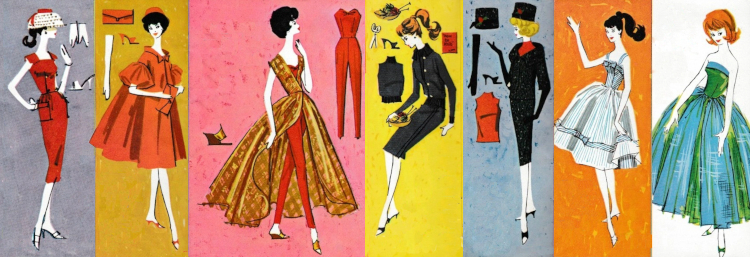
Vintage Barbie Illustrations
- Mattel fashion booklets, 1960-67 (approximately)
- Basic and Dressed Doll Boxes, 1959-64
- Doll Carrying Cases, 1961-72
- Jumbo Trading Cards, 1962
- Gift set art, 1960-70
- Illustrated fashion packaging, also about 1960-70
- Random House books (plus some from other publishers), 1962-65
- Dell Comics, 1962-63
- Whitman Paper Dolls, 1962-65 and 1967-73
- Whitman Coloring Books, 1962-65 (A mod sequel post is possible but not planned at this time.)
- More crafts and hobbies, 1963-1971
- Queen of the Prom board game, 1961-63
- Keys to Fame board game, 1963
- Sew-Free Fashion Fun Kits, 1965
- Sewing Patterns, 1962-?
- The Barbie World of Fashion board game, 1967
- Barbie’s best friend has a post of her own, mostly showcasing illustrations: Visions of Midge.
Plus the illustration “sidebars,” short entries on niche topics:
- Busy Gal fashion sketches, 1960
- Barbie Sings!, 1961
- Go-Together furniture sets, illustrated
- Color Magic, 1965-66
- Mattel fashions for Julia, 1968-69
- All the Barbie and friends illustrations on mod house exteriors like the one below
- Miss Lively Livin’ board game, 1970
- Window shopping, illustrated
- Barbie’s Baggage, illustrated (not super short, but surveys many illustration categories examined in other posts)
- Vintage dress-up and other child-size items for the boudoir
- The illustration component of the 1964 Little Theatre and travel costumes entry is sidebar-sized.
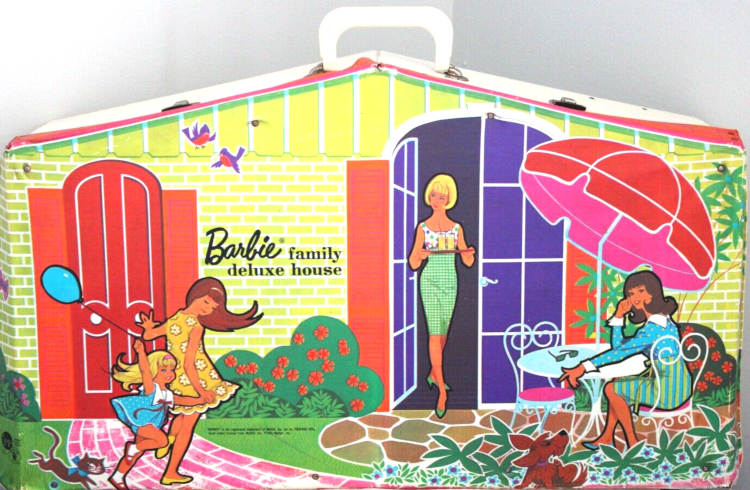
Barbie’s Built Environment
- Entries by year for many of Barbie’s early abodes: 1962, 1964, 1965, 1966, 1967-68, 1969, 1970.
- Barbie’s ’70s Travelogue:
- Mattel Modern and Susy Goose furniture, 1958-1966
- Barbie on TV, a roundup of some of Barbie’s early toy TV sets (this post also has a strong “illustration” component)
- Barbie’s Fashion Shop, 1963
- and a detour into Mannequins and Dress Forms, ’63-’73
- The Deluxe Reading Dream Kitchen, 1963 (note, this is not a Mattel product)
- The Little Theater, 1964
- Skipper’s Schoolroom, 1965
- Penthouse apartments, 1964-76
- Beauty parlors, 1964-77
- Japan-exclusive furniture, 1967
- Unique Boutique and Cafe Today, both 1971
- The Sears Karosel Kitchen, 1971-1976 (note, this is not a Mattel product)
- A roundup of fireplaces in Barbie and Barbie-sized houses, 1963-79
- The “built” environments of Whitman Barbie paper dolls, which real Barbie dolls can also use; 1963-1973.
- The built environments of mini vintage Barbies
- Seventies furniture and rooms not listed elsewhere
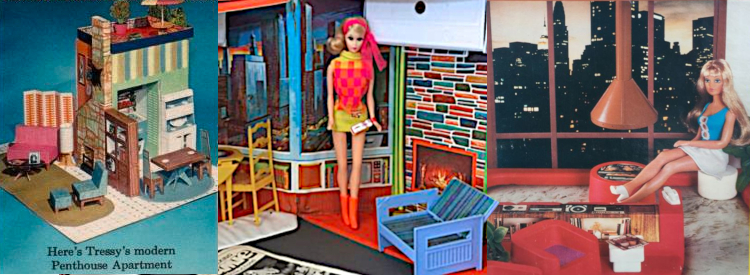
Articles relating to clones, rivals, and off-brand Barbie-style products
- Rival fashion booklets
- The Two Abodes of Tammy covers the living spaces of one of Barbie’s most notable rivals
- Barbie’s ’70s Travelogue, Part II: Unofficial Adventures is about non-Mattel playsets suitable to Barbie and Barbie-sized dolls
- Clones are recommended in the “existing alternatives” section of the musing, Three Nostalgic Black Barbies We Need (and a few existing alternatives).
- Clone kitchens: The Deluxe Reading Dream Kitchen, The Sears Karosel Kitchen
- Clone washrooms are prominent in Barbie’s ’70s Travelogue: Part IV.
- The pieces on penthouses, beauty parlors and fireplaces include non-Mattel offerings.
- Not Barbie on TV: Barbie and friends’ early TV sets that were tuned to other programs
- The entry on Mattel Modern and Susy Goose furniture includes some offbrand furniture items of the 70s and 80s.
- We wrote about clone carrying cases, including some created for competitor dolls.
- Certain of the sewing patterns are for generic fashion dolls, as are the Sew Simple and Cut ‘n’ Sew craft kits.

Miscellaneous Musings and Deep Dives
- A Chronicle of Barbie shoes, 1959-67
- Barbie’s Seventies Travelogue: the Appendix reviews vintage and nostalgic Barbie and Barbie-sized luggage options
- When Barbie Turned 21 in Manhattan, 1980
- Three Nostalgic Black Barbies We Need (and a few existing alternatives)
- Great Books for Vintage Barbie Fans
- The piece on Skipper’s Schoolroom includes “play sets that never were”: Barbie’s Sixties careers for which environments were not produced.
- Visions of After Five (1962) and Solo in the Spotlight (1960)
- Who wore it best? pairs vintage and mod Barbie and Francie fashions with their likely or confirmed inspirations. The Airborne edition does the same for vintage flight attendant uniforms, while the Mary Quant one highlights Francie fashions that appear influenced by Swinging London designer Mary Quant.
- Millennium Mod catalogs Barbie’s returns to the late Sixties youth-driven zeitgeist between 1980 and 2020.
- We tackle an age-old mystery with our investigation into Sew Free? Sew Magic? Sew Simple? Cut ‘n’ Sew??
- Fashions that weren’t, 1959-1970 looks at some possible rejected designs for Barbie and friends’ fashions.
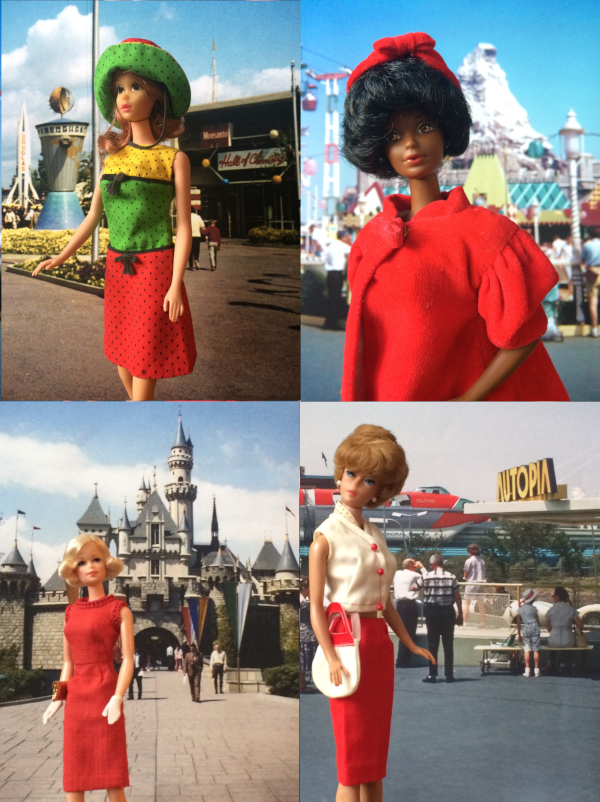
There’s still more to come, but before you scroll off into the distance, here’s the first image ever posted to this blog back in 2022: some of my dolls, dressed in vintage or vintage reproduction, in front of vintage Disneyland backgrounds belonging to Bill Cotter:
-
Rival Fashion Booklets (1962-66)

Soft hues suffuse a 1962 fashion booklet for Ideal’s Tammy. Clothes are shown worn by the character in detailed scenes, with accessories, background figures, and other immersive touches. See the booklet cover above, left; just a few of its charming fashion illustrations are below.

The following year, another booklet advertised all the same fashions and added many more. In addition to brand new drawings of all the previous offerings, I counted seven new (what I would call) ensembles, as well as sixteen new “pak” type outfit pieces, all illustrated on Tammy. Tammy’s family is introduced; Tammy’s mom gets six all-new ensembles, which also fit Tammy. Tammy’s little sister gets six for herself, and Tammy’s father and brother get a dozen to share.
Perhaps the glut of new fashions to present, including basic separates and menswear, drove the art style’s shift to cleaner lines. While cartoonish, the limited finesse of the second book could serve as an opportunity to detail the fashions more accurately. Since all the fashions from the first book were still available and represented, we can do some side-by-side comparisons.

Walking Her Pet, before and after the art revamp. Center image is from a 1963 Sears Christmas catalog; both illustrations seem to insist on a fuller skirt. Unless otherwise specified, all department store catalog images in this post come from the lovely christmas.musetechnical.com.

Cheerleader Outfit depictions. In the ’62 Montgomery Ward catalog the tiny nature of her bullhorn makes it look almost like she’s taking a selfie. On the first booklet’s cover, Tammy wore Dream Boat. A second, layered illustration appeared within.

While the ’62 Ward’s catalog shows the jacket in white, the booklets keep it the same blue as the dress. The booklets are correct based on examples I’ve seen.
One of my absolute favorite Tammy fashions is Pizza Party. Imagine if you saw someone wearing this.

Model Miss is another favorite. While the booklets agree that the coat is blue with white trim, the catalogs sometimes show red with white trim. Both versions have been found in the wild (the hatbox is always white with red accents).

Model Miss interpretations, plus department store catalogs from ’63 (Montgomery Ward again) and ’64 (JC Penney) As mentioned, there were also new ensembles, including two for skating (different types of skating), one for golf, one of knitwear, one non-knitwear to be worn while knitting, some foundation garments, and Fur ‘n Formal, the party dress Tammy models on her Evening in Paris carrying case.

And in 1963 Sindy was introduced across the pond. Adapted from Tammy, she had her own wardrobe. While both Sindy and Tammy may own a school outfit, a rainy day outfit, a party dress, et cetera, almost all differ. I did find one matching ensemble in their ’63 wardrobes: Sleepytime, through which we can observe how Sindy’s illustrations also have their very own style.

The Sindy booklet image above right comes from sindydoll.wordpress.com, who also compare the illustrations to photographs of the outfits on dolls and thoughtfully contextualize the designs alongside real-life fashions of the time.
Another, shorter-lived Tammy “clone” was Tina Cassini. Her booklet illustrations, via Toy-Addict, strike just the right balance of chicness and sharpness.

’64 Sears catalog excerpt in center via WishbookWeb Though the Tammy illustrations lost some charm in between booklets, the later, cartoony version was also used for some paper dolls that I think are just divine. We’ll discuss them sometime, but for now let’s turn our attention to Tressy.
In contrast to Tammy, the girl next door, American Character’s Tressy–like Tina–was all glamour all the time. Only, her 1964 fashion booklet was light on sophistication, its uncolored pencil sketches produced by a seemingly amateur hand.

The work of a professional? Evening Jewel was only offered in this booklet. The sketch looks a bit similar to Barbie’s After Five, although the finished product does not.

with excerpt from a ’64 JC Penney catalog Chic Shift and Neat Knit were only illustrated in this booklet (of four we reviewed, at least), though they were still available for purchase in later volumes.

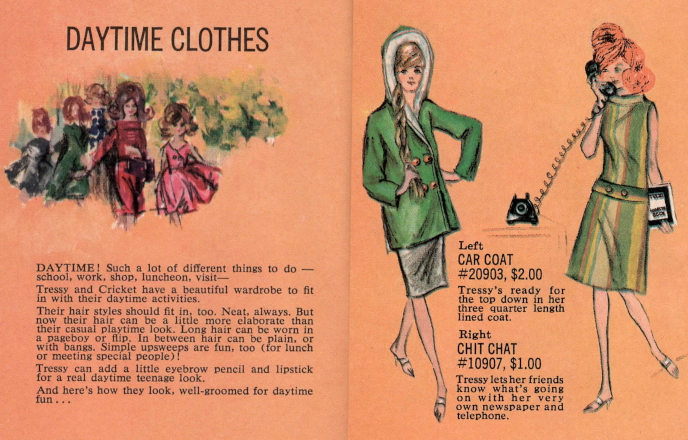
with ’65 Wards and ’64 Sears catalogs (the latter via WishbookWeb) Those later volumes, including this 1965 one, brought Tressy’s illustrations some much-needed color and quality. This one also introduced her little sister, Cricket. Outfits were divided into categories: Playtime, Daytime, and Party.
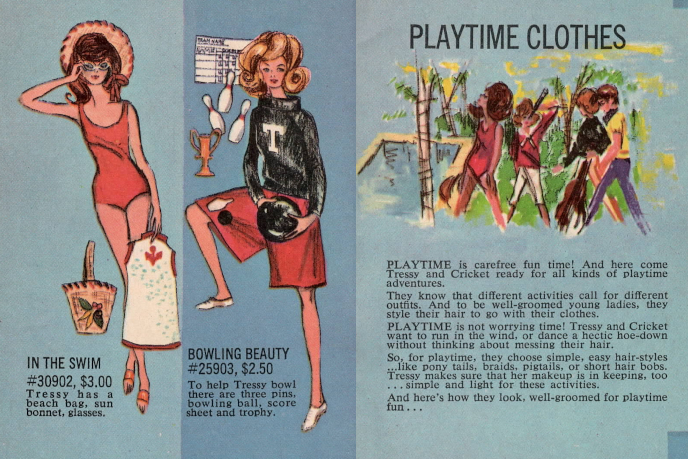
In the Swim was also the name of a Barbie number.
New for daytime, the youthful Chit Chat is one of my favorite Tressy looks.
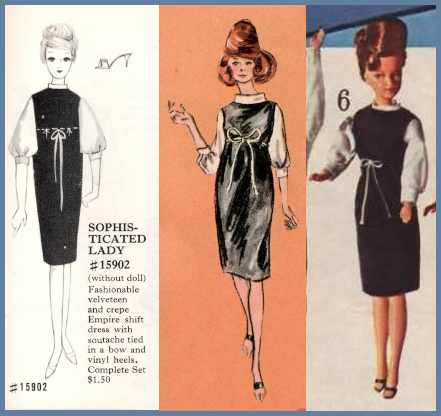
Tressy’s Sophisticated Lady, a daytime ensemble, is altogether unlike Barbie’s.
Including another excerpt from the ’64 Sears wishbook. In Tressy’s first, grayscale booklet, the “Surprise” of her Surprise Party fashion must have been what the dress looked like–the naked eye cannot perceive it. In the color version we see it and Cricket’s version, too.

A recurring fashion was On Fifth Avenue. Barbie’s On the Avenue refers to the same avenue.
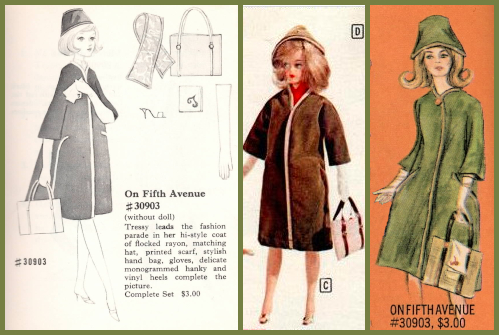
The ’64 Penney catalog again supplies an image of the real deal. Another booklet of the same year added Tressy’s friend Mary Make-Up to the mix. Like an early Tressy appearance in the ’63 Sears catalog, Mary modeled the dark-colored version of their dress.
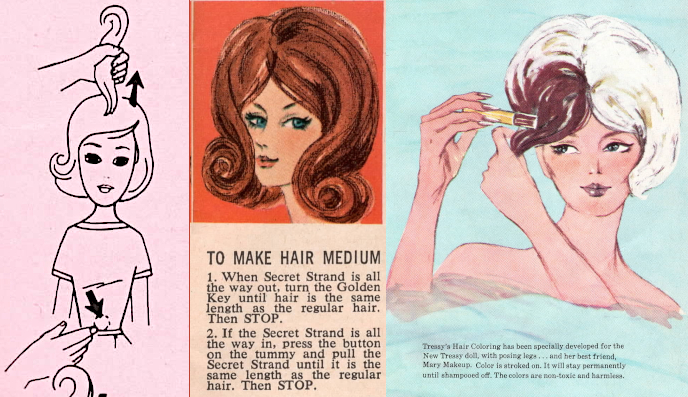
Unlike most competitors, all Tressy booklets include instructions for hair styling. The art style evolved for the styling instructions, too.
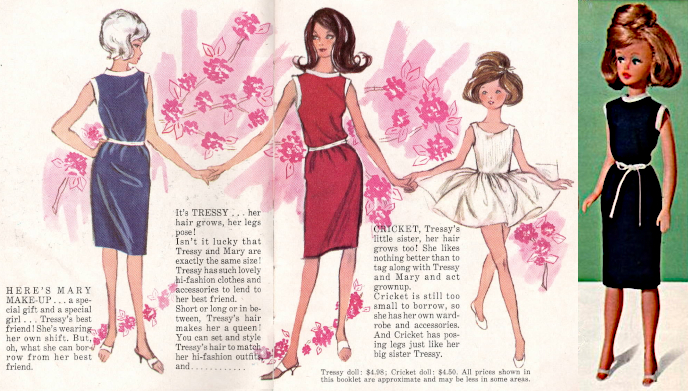
Whereas Tammy’s later booklet iteration pared down its decorative elements, Tressy’s became more elaborate, the three characters inhabiting detailed scenes. In case the premise wasn’t immediately clear, one scene emphasized how Mary could wear Tressy’s outfits–even carrying a hatbox with Tressy’s name prominently of the front–while showcasing several of their modish looks.

On the rack above, Sugar ‘n Spice seems inspired by a ’64 Mary Quant design.
Barbie and Tressy both have ensembles named Black Magic. On this occasion, Mary struts her stuff in Tressy’s.

Left image is the ’64 Sears wishbook again Both Barbie and Tressy have a Hootenanny, too. While Barbie’s, in the Sew-Free line, seems bound for a barn dance, Tressy very clearly wears hers to perform anti-establishment anthems at some smoky Greenwich Village coffeehouse.

One last appearance of the ’64 Sears wishbook capturing Tressy’s beatnik chic. None of which is to say that Tressy borrowed from Barbie, or vice versa. Some lesser characters and clothing lines definitely did borrow, though. This 1965 Bobbi book is positively shameless:
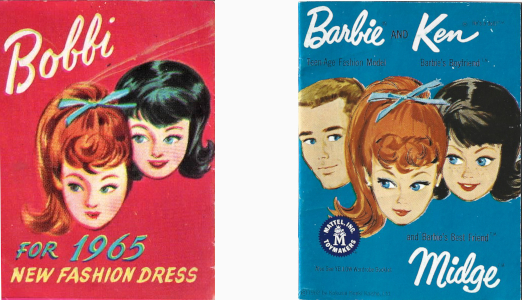
Bobbi vs. Barbie 
Bobbi 
vs Barbie 
Bobbi… 
vs Sindy! This round of 1963 Sindy booklet pics comes from the extensive collection over at The Little Sindy Museum.
Other “lesser” fashion booklets of the time period tended to use photography or simple sketches of the garments laid flat. One even used photographs of the dressed dolls to trace from.
Tressy and Cricket had one last fashion flutter in 1966 with a new mod look. (Mary, sadly, was out of the picture.) The booklet was in the style of the earlier volume for Tressy and Cricket, with categories for play, day, and party. The boundaries between “play” and “day” had eroded–can you tell which ensembles, below, are for play, and which for day?

After her mod refresh, Tressy was advertised in department store Christmas wishbooks for two more years. Much of the clothing advertised for her in these catalogs did not appear in any American Character Tressy booklet that I could find, but booklets for the European Tressy versions help to fill in the gaps.

Above left, the ’66 Sears catalog archived by Wishbook Web advertises a collection of five mod Tressy fashions, at least some of which were listed and priced in the mod Tressy catalog sans illustration. Four of the five appear in a single “budget fashions” spread from a Palitoy (U.K.) pamphlet that employs a flatter, cleaner art style than the U.S. Tressy booklets, reminiscent of Saturday morning cartoons.
The ’66 Montgomery Ward catalog advertises a different set of five mod fashions (and also shows Tressy in Serendipity). Two for Tea and Good News, both from American Character’s mod booklet, are among the five. The other three are unknowns–except they appear in a Schildkroet booklet from Germany which someone amazing scanned at high resolution and shared. In Germany, the characters Tressy, Mary, and Cricket are replaced by Gaby, Kessy, and Babsy respectively. I’m in love with the cover of their booklet:

The German names for the fashions Gaby and Kessy, in the inset below, share with Tressy’s mod Montgomery Ward-robe are Derby, Abend in Gold (Evening in Gold) and Rummelplatz (Fairground).
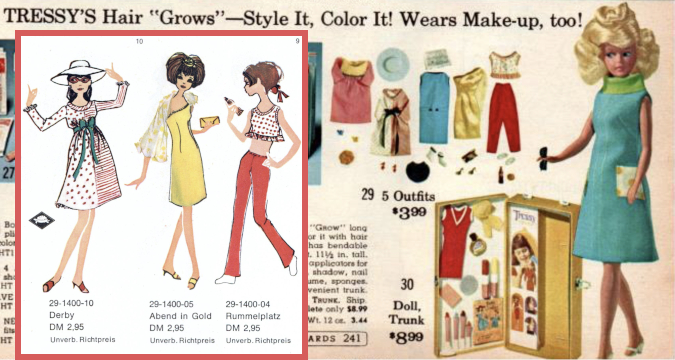
I assume Derby does not refer to the city in England. However, diverse place names do pop up in the international booklets. It’s interesting to see, for example, the first U.S. On Fifth Avenue which became On Park Lane in the U.K.; and the second On Fifth Avenue version which became, in Germany, Kurfuerstendamm (per Wikipedia, the “Champs-Elysees of Berlin”).

The children of Germany also visited Piccadilly, New York, and Paris through Gaby’s fashions. The French Tressy by Bella had many fashions with place names too, all parts of France: Martinique, Saint-Tropez, chez Maxim’s…
Tressy’s story ended abruptly in ’67, at least her American Character arc did. As for the many international Tressy versions, we’ve browsed only these couple booklets–others have proven hard to track down.
Tammy’s tale continued well past what we’ve covered, but those booklets too are elusive. In particular, I couldn’t find any that showcase her fashionable friend Glamour Misty, who made the scene in ’65 right after most of Tammy’s family disappeared. (Hmmm…) And did Uneeda’s Suzette or the eerie but beautiful Wendy Ward ever merit an illustrated booklet? So many rival fashion booklets, yet so many (hopefully) still to see… I’m keeping an eye out.
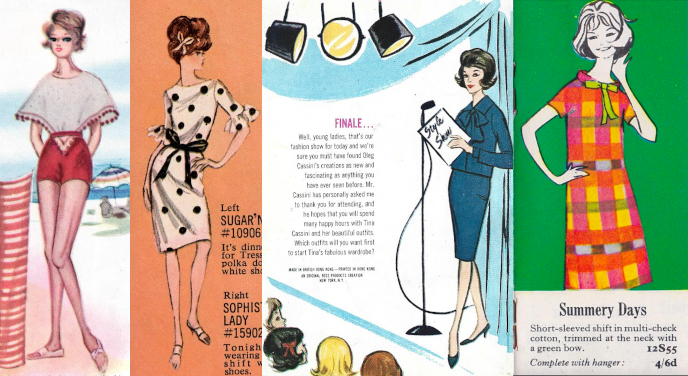
Chic looks for Tammy, Tressy, Tina and Sindy Where to next? This is the most recent post on Barbie’s clones and rivals. We previously encountered Tressy at her penthouse and beauty parlor. We previously encountered Tammy in her suburban havens. We’ve also discussed Mattel’s fashion booklets for Barbie at some length. Or just head up to the Table of Contents to see more options.
-
Barbie’s ’70s Travelogue, Part III: Arrive in Style
In the first two posts in this series, we covered new and exciting destinations that opened their doors to Barbie during the Seventies. Whether it was a ski holiday, a fishing trip, or a beach vacation, while Sixties Barbie could dress for the occasion, only Seventies Barbie ever arrived. But did she arrive… in style?
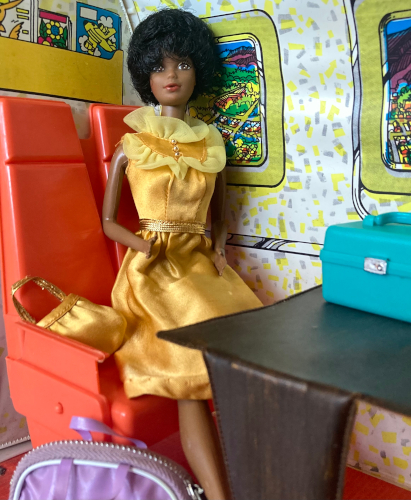
Yes, of course she did. Let’s find out how.
We’ll dive straight in with the headlining act: Barbie’s most stylish mode of transit, 1959 to present. Naturally, that can only mean the Friend Ship, Barbie’s United-Airlines-branded commercial aircraft which was advertised in 1973-74.
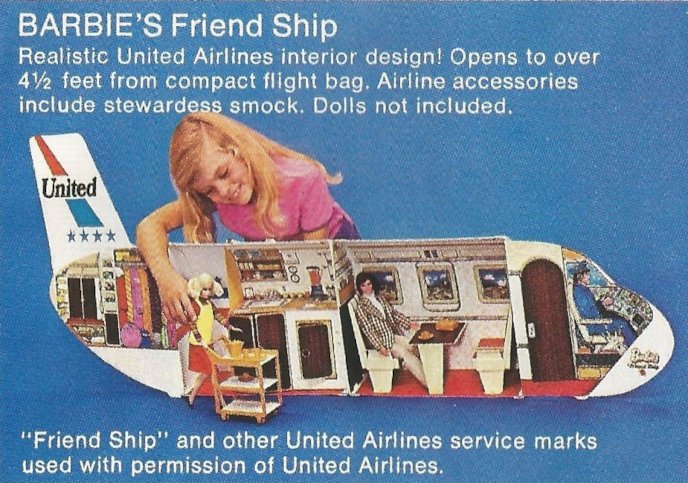
Friend Ship in a 1973 World of Barbie booklet via Toy-Addict Granted that Barbie is usually in uniform and on the clock while aboard the Friend Ship, but even that was pretty glamorous at the time. The ship included a galley, service cart with accessories, passenger seating, plus illustrated areas for the cockpit and storage for luggage and outerwear. Opening out to amost 5 feet long, it can serve as an eye-catching display.
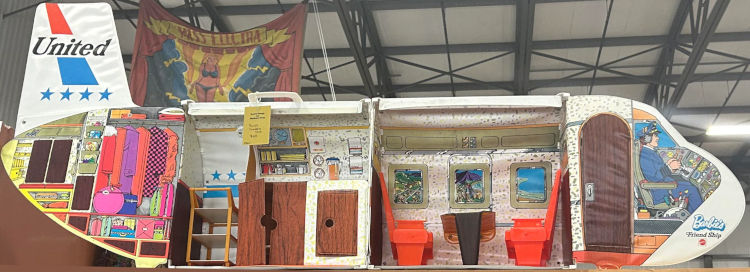
Friend Ship spotted in the wild (an antique mall) by redditor Sydneyskyex3. The cousin of the Friend Ship, Barbie’s Chris-Craft-branded Dream Boat was advertised in 1975 but went out with the tide after just one year. Functionally, it’s very similar to the plane: a case that opens out to form a long vessel. Inside is a galley kitchen with booth seating and, in a second space, a day bed that converts to bunk beds. While the Friend Ship exterior resembles an airplane even while closed, the folded-up boat is just styled like an anonymous rectangle. However, when open for play its exterior forms important parts of the scene: the ship’s decks, ladders down toward the water, and space for the removable bridge Ken operates below.
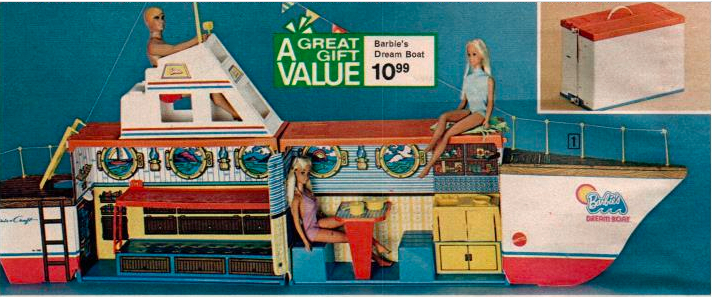
Dream Boat in the 1975 JC Penney Christmas catalog via christmas.musetechnical.com Finally, during this decade Barbie was regularly seen zipping from location to location on four wheels. While automobile travel was certainly not new to her (for that matter, she could hop into various quirky little biplanes and speedboats, whether official or no, in the ’60s too), her ’70s autos took on a more vacation-y bent. Like the Dream Boat, the Country Camper, which we also visited in an earlier entry, was both the mode of transport and the destination. It was advertised from ’72 to ’77 and was joined by the similar Beach Bus in ’74.
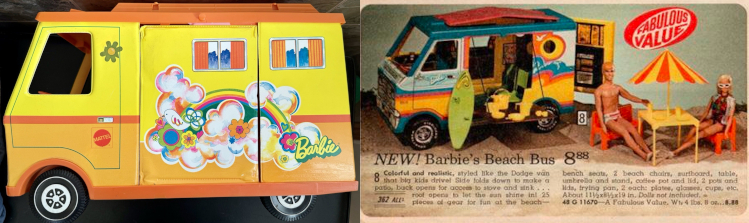
dianwense-1 on eBay; christmas.musetechnical.com The Country Camper’s psychedelic aesthetic carried through to its interior:
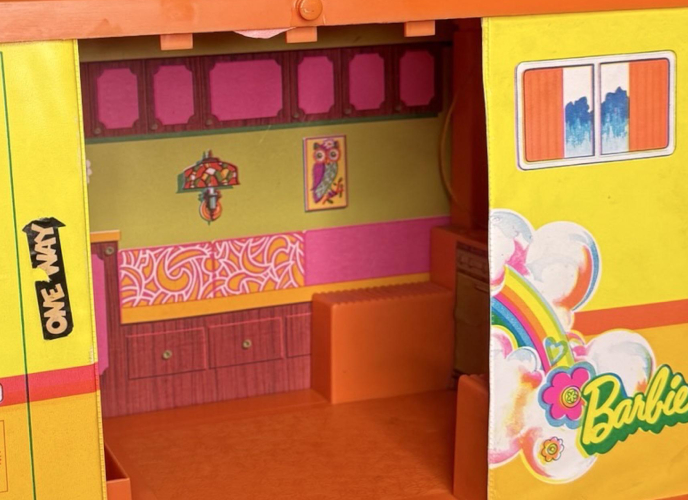
via a-the-anomaly on reddit In ’77, the Star Traveler elevated Barbie’s style on the road from van life to, per the JC Penney Christmas catalog, “a 36 in. long lookalike of a GMC motor home.” The interior was comparatively luxe, with kitchenette, dining area with L-shaped seating, swivel chairs, bunk bed, shower, and a total of two sinks; camp chairs, hibachi and detachable deck were also included for roadside cookouts. Like the earlier bus and camper, Barbie could use this commodious RV to return to nature. It could also serve as practical transport for her new Superstar lifestyle, hitting all the stops on a sold-out world tour.
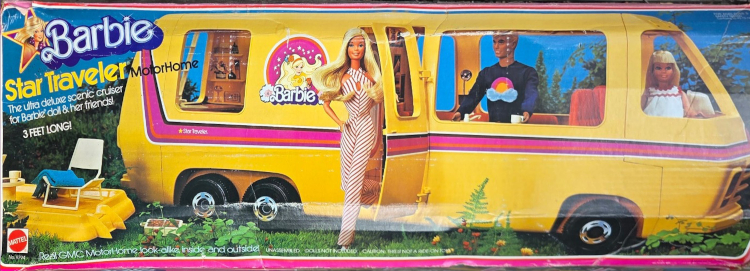
wingmyth on eBay One final Superstar vehicle, the Star’Vette, was less spacious than any of the foregoing and seems more geared to bopping around town. Yet it too is an option for long-haul travel, evidenced by the aluminum-look suitcase strapped to the luggage rack; it even had a trailer hitch in back.
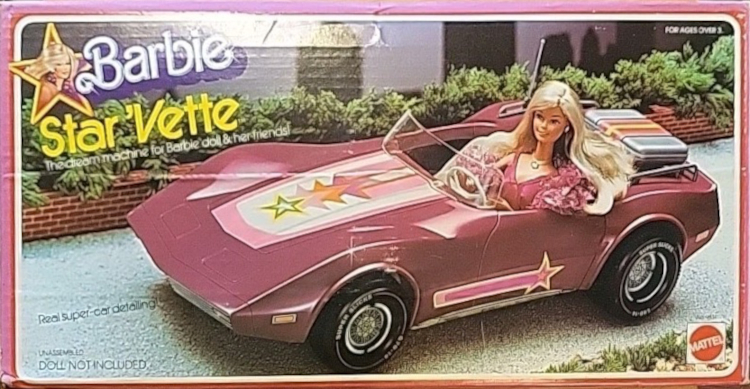
arianeu1 on eBay A trailer hitch… luggage rack… and a suitcase… before Barbie’s vacation gets going she may need just one or two more things!
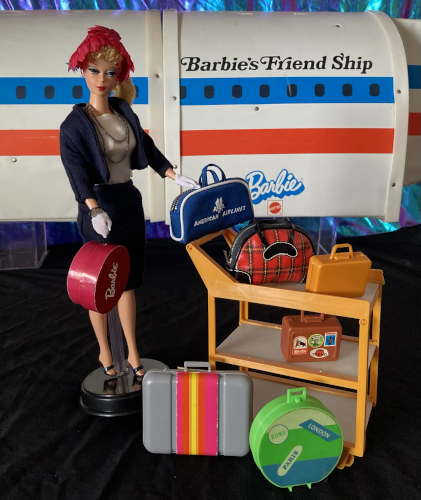
Where to next? This post is part of the Barbie’s Seventies Travelogue series. If you’re just joining us, you may next choose to peruse Part I or Part II. Or turn to the Appendix. Our most popular story on the world inhabited by Barbie is the one on penthouse apartments, which also has some Seventies flavor. The overall most popular posts on this site are about shoes and fashion booklets. Or just head up to the Table of Contents to see more options.
-
Sidebar: Miss Lively Livin’ game (1970)
Because of its gorgeous design, we’ll briefly pause to appreciate one last Barbie board game of the vintage and mod eras, even though its art uses photographs in lieu of hand-illustrated characters. The whole package is such a sumptuous rainbow that it’s irresistible.

Game board and box via Your New Fun Exciting Thing on eBay. Look closely at corner squares on the board to see shots of the characters occupying contemporary playsets the Lively Livin’ House and Cafe Today.
-
The Barbie World of Fashion game (1967)

We’ve noted before how the lush illustrations of the Queen of the Prom and Keys to Fame board games enriched the world of Barbie visuals in the early-mid ’60s. In the mod era “lush” was less on-trend, but 1967’s Barbie World of Fashion game, with its travel-focused play, was illuminated by bright, bold interpretations of the characters and ensembles.
On the game box, shown above with a Hair Fair repro doll for scale, the game’s playable characters–Barbie, Francie, Casey, and Skipper–are shown stylishly attired. Added references to travel include Casey toting her train case, Skipper waving flags, Barbie donning a lei or kneeling by her matching luggage set, and Francie rolling around in a pile of travel brochures and cash.

Some characters are dressed sensibly, such as Casey in Floating In and Wild ‘n’ Wooly; Francie in Mini-Chex; and Skipper in Trim Twosome, all shown above.
Other fashion choices are more questionable, such as the oversized Barbie wearing Francie’s The Combo, who dominates the scene; Barbie’s also found stretching out Francie’s striped swimsuit, and Barbie and Francie wear each other’s similar numbers Trailblazers and Hill-riders, all seen below.

The clothing swaps may be calculated, since gameplay involves buying whatever fashions are available regardless of whether they’re sized to suit.
One last box illustration shows Barbie on the phone with Ken. No fashions were produced for Ken in the year of the game’s release, and here both characters wear nonexistent fashions (though Barbie’s reminds me sliiightly of Knit Hit).
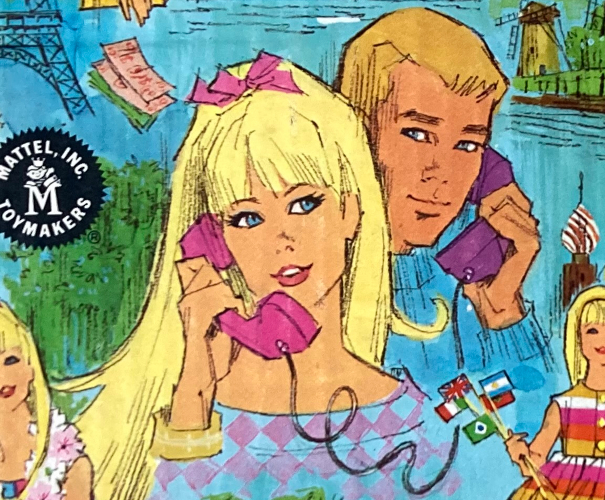
While the booklets of the mod years are World[s] of Barbie Fashions, this game takes place in a Barbie World of Fashion. The similarities between game and booklets go beyond just their names, though: on the game board, Barbie is depicted (in her own clothing) in sometimes-modified booklet poses. Adding a parasol to Jump Into Lace to navigate the Congo; draining the blues from Swirly Cue for Soviet Russia; sweating in the Sahara in Scene Stealers, and so forth.

The in-game fashions the characters tour the world to model and purchase are direct booklet copies in a slightly larger format, which is nice:

Though the game board is mainly populated by Barbie, a pair of booklet Francies also appear:

And such colorful, appealing suitcases!
Where to next? This is the most recent post on early Barbie illustrations. The most popular posts in this category are on fashion booklets and carrying cases. Other popular posts on this site include those on penthouse apartments and on shoes. Or just head up to yon table of contents to see all the options.
-
Illustrated fashion packaging
![Three overlapped photographs of mostly black-and white packaging for early-60s Barbie ensembles. Each has a large size illustration of Barbie in black and white down the lefthand side with text in mostly pink at right (only visible in one of the three photos because it's duplicated on all the packages and didn't need to be shown three times). The Barbie figures wear, L-R: a full-skirted sundress with tie back, wide-brimmed hat, and closed-toe shoes; a two-piece swimsuit covered by a loose-fitting jacket plus open-toed shoes; a babydoll-shaped nightie and heels with pompons on the toes. Each Barbie has her signature ponytail, the middle brunette and the others blonde. The text reads: Another beautiful Barbie teen age fashion; Barbie is the bus Teen Age Fashion model who has a complete wardrobe of lovely new fashions to wear! You can dress Barbie in the latest Paris fashions... in glamourous [sic] party dresses... in school sportswear... swimsuits... accessories from the Barbie Teen Age Fashion collection styled exclusively for your Barbie doll to wear..." The text is interspersed with little pictograms, for example, a drawing of a wardrobe--like her "chifferobe" from Suzy Goose--before the word "wardrobe," an Eiffel tower after "Paris," a full-skirted frilly dress before the verb "dress" in "you can dress Barbie," etc.](https://silkenflame.net/wp-content/uploads/2025/10/fp_b4midge.jpg?w=750)
Barbie illustrations on the backs of boxed early ensembles: 916 via yolla; 986 via marysnn814b; 976 via kekaionekea, all on eBay. Colored outlines are just to further distinguish different packages. All had the same text as shown at right. Barbie’s early ensembles were sold in boxes with cellophane fronts that neatly displayed the contents, along with black-and-white illustrated backs featuring a bit of snappy text.
Only for a short while did Barbie appear alone on any packages; once Midge was introduced, even the earlier fashions still in production came in updated packaging that included her.
![Two similarly mostly-black-and-white pictures of packaging with pink accents. At left, Barbie in Garden Party and Midge in Red Flare complete with purse, both wearing open-toed shoes and gloves, both blonde, appear to walk side by side. Text reads "Another beautiful teen-age fashion for Barbie and Midge; Barbie, the "Teen-Age Fashion Model," and Midge, her best friend, are modern young sophisticates with complete wardrobes of lovely new fashions. You can dress both Barbie and Midge for every wonderful occasion in the latest Paris fashions; in glamorous party dresses; in school sportswear; in swimsuits; and in accessories fromt he exclusibe Barbie and Midge Fashion Collection by Mattel." Interspersed are the same pictograms. At right, Barbie now has a blonde bubble cut and her Garden Party dress is filled in with warm pink. Midge is brunette and wears Crisp n Cool. In the background, Ken and Allan look on. The text is slightly updated and no longer includes pictograms: "Another Teen-Age Fashion for all Barbie and Midge Dolls; Barbie & Midge [in pink scrawled text]; Barbie and Midge are modern young sophisticates with complete wardrobes of lovely new fashions. You can dress all Barbie and Midge dolls for every wonderful occasion! Glamorous party dresses, school sportswear or new style swimsuits... with accessories from the exclusive Fashion Frosting(TM) Collection by Mattel." A new caption reads, "These fashions are designed exclusively by Mattel and are tailored only of the finest quality fabrics, fashioned for perfect fit and finished with zippers, buttons and dressmaker details."](https://silkenflame.net/wp-content/uploads/2025/10/fp_midge.jpg?w=750)
In 1962 Midge joined the fray, and by ’64 the design had evolved to feature Barbie’s bubble hairstyle. Both via brendassouthpacificplace on eBay. The design above right would continue to be used through ’66, sometimes with Fashion Queen and Miss Barbie listed below Barbie & Midge.
Some ’60s pak fashions also had illustrations on the back, but not too many and not too elaborately.
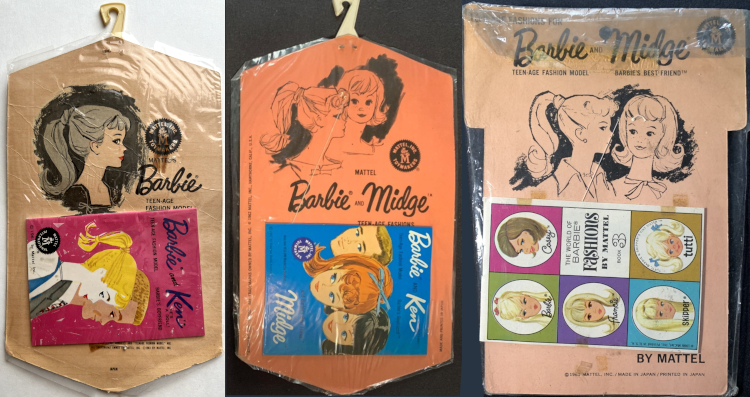
Evolution in pak-aging. Via eBayers Shapem and adayinthepast. The rightmost pak’s Barbie-and-Midge-themed cardboard backing, for 1966’s Tailored Tops, has a (c) date of ’63 but includes a booklet with a (c) date of ’66 on which Midge does not appear. Her days were numbered.
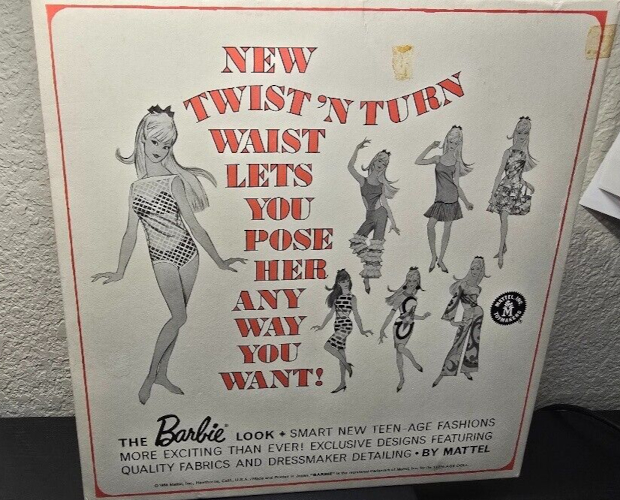
Another from brendassouthpacificplace. Her store’s stock must be seen to be believed. Starting in ’67, ensemble packages advertised the new Twist ‘n’ Turn Barbie doll using black-and-white versions of art that from the T’n’T fashion booklets. The one shown above is special: its dressed characters look similar to booklet fashion sketches, but they aren’t from the booklets. Three of the looks–#1683 Sunflower, #1686 Print Aplenty, and #1687 Caribbean Cruise–were shown on American Girl Barbie in some ’66 booklets, but were not advertised at all in the T’n’T booklets (the first of which is also dated 1966). The other three ensembles depicted–#1805 Bouncy Flouncy, #1806 Pajama Pow, and #1807 Disco Dater– were never illustrated in any Mattel Barbie fashion booklet. (This package itself contains a fourth ensemble that was never illustrated in a booklet, #1810 Bermuda Holidays. It’s unclear if that fashion was ever sketched.)
The following year, a comparative calm descended. The packaging for Twinkle Togs shows exactly the sketches that appear in 1967’s booklets:

Barbie and Stacey enjoy “the best of two fashion worlds from Fifth Avenue to Carnaby Street,” via Deal Hunters Florida. The year after Stacey’s introduction, P.J. was added to the composition (seen below on the box for #1880 Winter Wedding). Where is Christie?
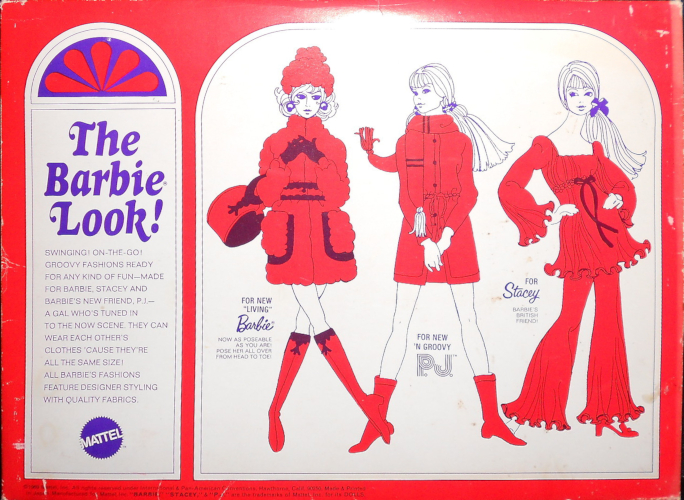
Another brendassouthpacificplace wonder. Barbie’s differently-sized colleagues (Ken, Skipper, Ricky, Francie, Tutti) had fashion packaging we won’t explore here, except to note that the Francie ensemble box art in this last style includes a unicorn:
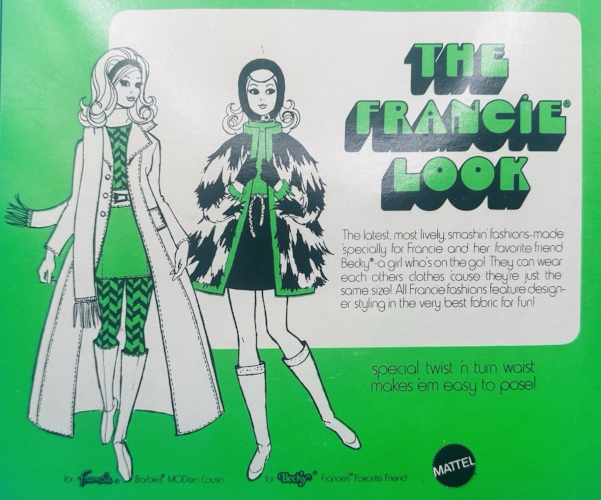
Becky! #3444 Midi Plaid packaging from fashiondollmarket on eBay. Where to next? This post is about vintage Barbie illustrations. Our most popular post in the category is on Mattel fashion booklets. The most recent post in the category is all about Midge. Other popular posts on this site include the Many Abodes of Barbie series (currently covering 1962-1970) and our Chronicle of Barbie shoes, 1959-67. Or just head up to the Table of Contents to see more options.
-
Japan-exclusive furniture (1967)
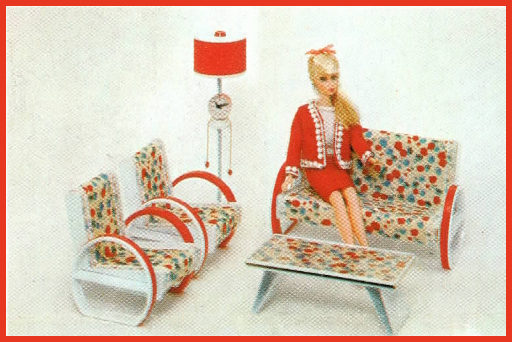
“There’s lots of fun furniture, too!” enthuses a 1967 Barbie booklet produced for the Japanese market. “Desks, chairs, reception sets, and other colorful furniture with a twist. Have even more fun with Barbie! Yellow dress with red chair… your dreams will fill your heart.” (Translation is very approximate.)
And there are pictures: Two versions of the booklet, shown above and below, advertise two versions of the “reception set,” both with brightly-printed upholstery and coffee table to match; curious circular armrests; and a funky clock embedded in a floor lamp.
As for the rest of the furniture, we don’t get to see the desks, nor do we see the “other colorful furniture.” What we do see is a startling assortment of chairs, again with variations between the booklets.
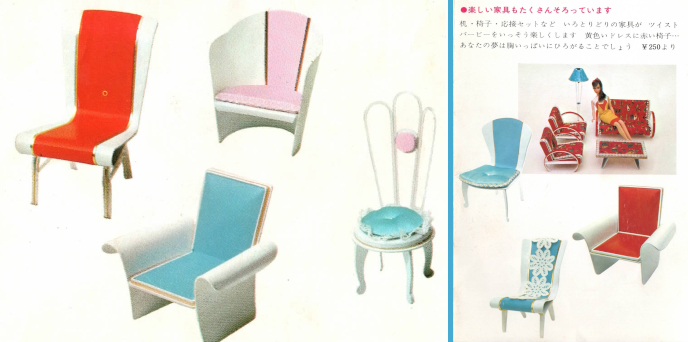
Left, chairs advertised in the first 1967 booklet. Right, page from the second 1967 booklet shows different chairs and reception set. Did all of these variations exist? Did any of them? What about the desks? Keiko Kimura Shibano, in her very thorough book on Barbie in Japan, reproduces the booklets and mentions that the furniture is “very scarce.” The many, varied, and detailed scenes used for her book’s excellent photography do not appear to feature any of this exclusive furniture. Is it out there somewhere?
The book does include one photograph of another Japanese market exclusive: “Twist ‘N Turn Barbie’s Golden Chair Set,” another rough translation, or what Kimura Shibano refers to as the “Twist ‘N Turn Barbie house.” The “house” in question is little more than packaging to hold a doll, chair, and mini TV (the last was also sold in the US in some accessory paks). An advertisement for the set, unearthed on Pinterest and attributed to one ggsdolls, is undated. The doll and fashions shown both in the advertisement and in Kimura Shibano’s photograph of a real set all appear in the ’67 pamphlets, so we can approximately date this set to 1967–but this whole post is approximate.
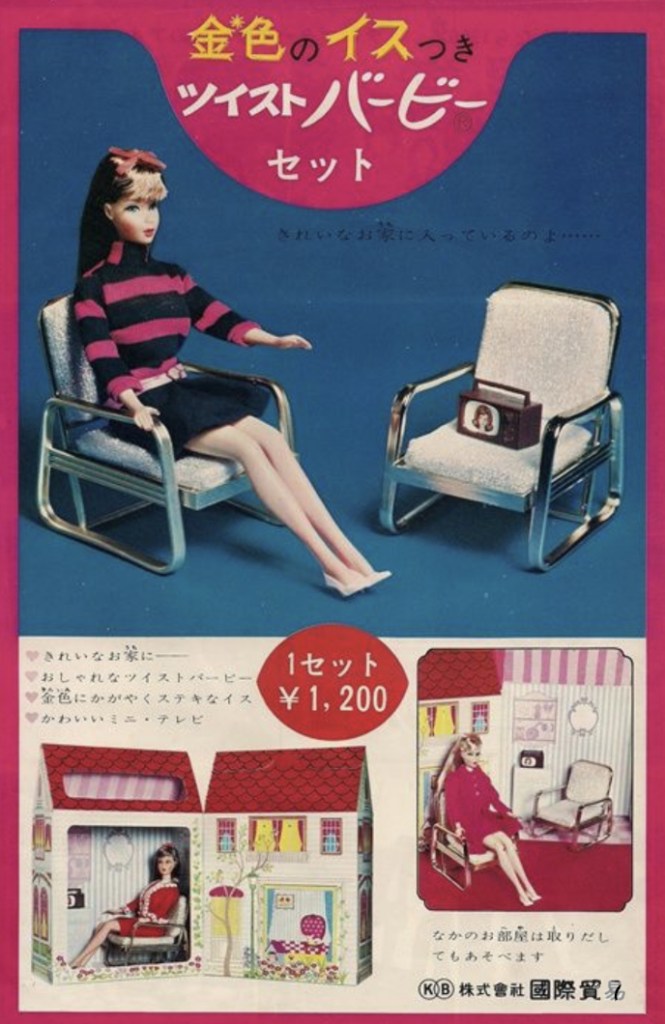
I think this vintage ad was scanned by ggsdolls. As the advertisement’s images show, in quality the chair was beyond anything available stateside, with convincing chrome look (actually painted plastic) and real upholstery. The silhouette is contemporary, the color palette restrained. Rarely has Barbie reposed in such refinement. While extremely rare, deboxed examples of this chair are occasionally seen, often with chrome paint long since flaked away, cushions disintegrated; but in 2024 a practically pristine piece was sold at auction.
There’s one last Japanese-exclusive furniture item that definitely did exist, though it too is rare. This one could seat two!
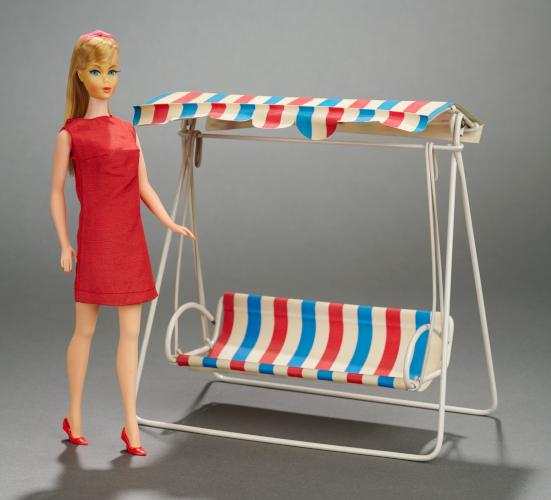
See it at Theriault’s. It looks similar to the earlier Go-Together/Miss Barbie lawn swing that was available in the U.S., but while those were plastic with cloth awning and seat, Theriault’s describes this one as a metal frame with vinyl elements. They indicate its year as 1967.
An aside: This piece, once part of Barbie designer and utter legend Bill Greening’s collection, was auctioned off along with many of his treasures. It’s beyond sad that Mattel booted Bill, and I don’t wish to make light of it here. To browse the many rarities included in his Theriault’s auction is simultaneously fascinating and heartbreaking.
But back to the topic at hand. In 1967, Barbie had many places to sit in Japan. We don’t know for sure if she had a desk, as the booklets claimed, but if she did it’s likely she could sit there as well. I’d also like to mention in closing that the T’n’T Barbie who modeled fashions for those ’67 pamphlets was frequently shown sitting on her x-stand. By no means a Japan-exclusive piece, this may have been an exclusive utilization thereof.

Where to next? This post is about Barbie’s early built environment. The most recent post in this category concerns Seventies rooms and furniture, and the most popular are those on Mattel Modern and Susy Goose furniture and on penthouse apartments. Otherwise, the overall most popular posts on this site are about Barbie shoes, 1959-67, and about Mattel fashion booklets. Or just head up to the Table of Contents to see more options.
-
Sidebar: Go-Together furniture sets, illustrated
Our write up of Barbie’s Go-Together furniture for the many abodes of Barbie series pauses to appreciate the immersive representations on the sets’ packaging. Let’s revisit that imagery more comprehensively.
The first box art featured ponytail Barbie.

#0408 via Worthpoint 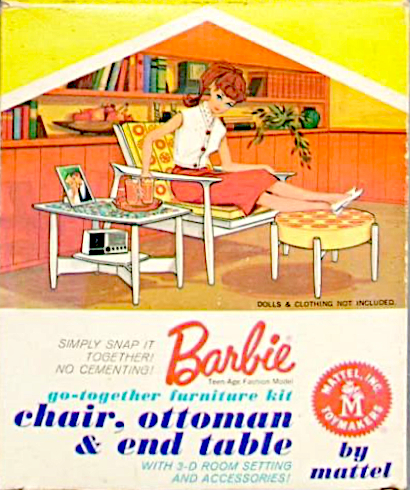
#0409 via Pinterest 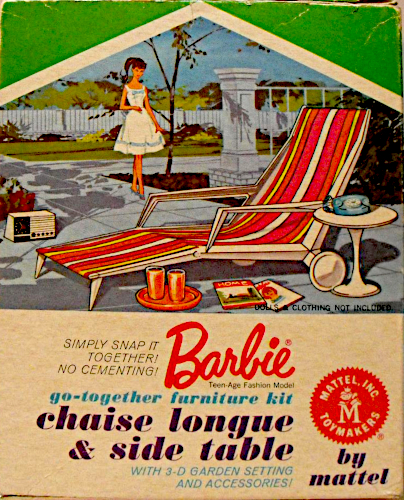
#0410 via Worthpoint Two sets featured the Fashion Queen.
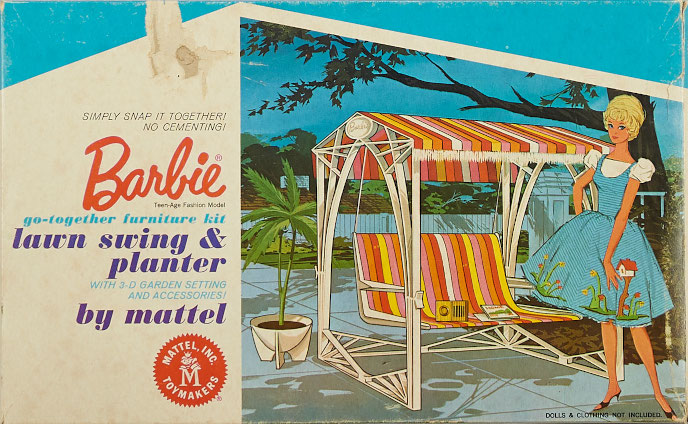
#0411 via Theriault’s 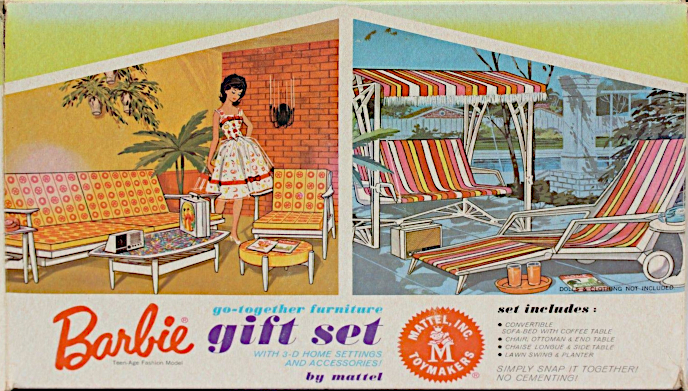
#4005 via Worthpoint In one illustration Barbie is a bubble cut, while another appropriately features Skipper instead of her big sister.

#4010 via Worthpoint 
#4011 via Thread Chicks (eBay) Finally, one illustration shows bend-leg Barbie, AKA American Girl Barbie, enjoying the furniture.
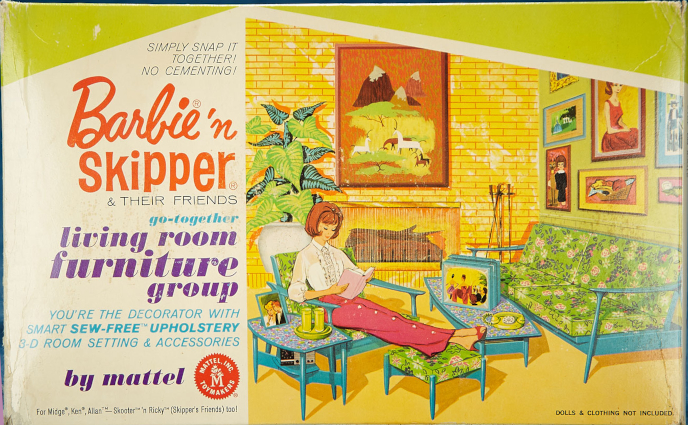
#4012 via Theriault’s The box illustrations burst with charming little Barbie-centric details, like the framed “photo” of Ken and Barbie visible immediately above, first appearing in set #409; the illustration is a faithful depiction of the genuine article:
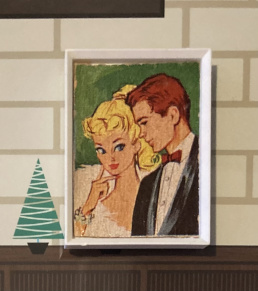
The genuine article on a non-Barbie backdrop by Donna Mibus. Same for the television as depicted on sets like #4012 and #4005:

The walls of Skipper’s room, as we noted in the original post on these sets, include both framed photos and dolls of Barbie’s friend group; its box art reflects all of these in miniature. And the box for #4012 clips off the top corner of a lovely formal portrait of Barbie as seen in the actual furniture group,

wall part via vintagedollstoys (eBay) a portrait which brings swirl ponytail Barbie into the illustrated Go-Together fold.
-
Barbie’s ’70s Travelogue, Part II: Unofficial Adventures

Sears catalog images from 1976 and 1973 via christmas.musetechnical.com Last time, we looked at play sets representing various far-flung locales frequented by Barbie in the Seventies. While Mattel was shuttling their characters between mountains and beach, other manufacturers concocted their own dream destinations for Barbie and her rivals. Let’s review a few that helped further expand Barbie’s horizons.
A-frame Ski Lodge by Omlie Industries
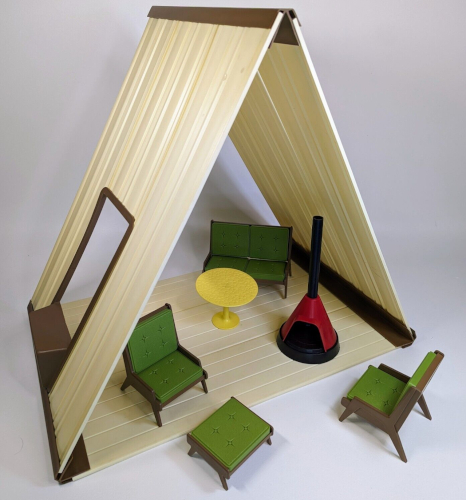
via saltyladybird on eBay. The first notable entry in off-brand vacation destinations arose in 1973, one year after Barbie’s own Ski Cabin, and was intended “for all fashion dolls.” At 20 inches high with a Malm-style freestanding fireplace, the A-frame Ski Lodge managed to be both spacious and cozy, its hard plastic furniture in rich tones with stylish silhouettes.

via tjsoula on eBay If the folks at Omlie made any other Barbie-suitable play sets, we’re keen to learn about them.
Suntan Tuesday Taylor’s Vacation House by Ideal
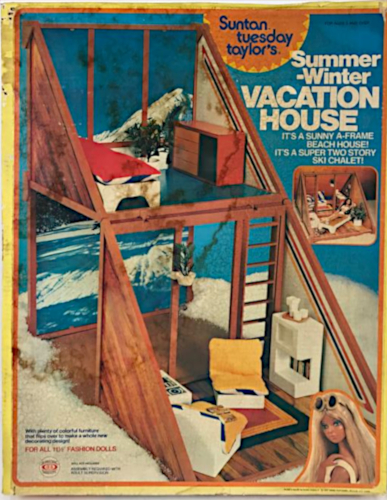
Savacool and Sons The alpine fun continued at Tuesday Taylor’s chalet in ’77. A two-story structure with upper floor reachable by ladder, it boasted stunning views (as in Tuesday’s penthouse, photographed backgrounds offered panoramas through floor-to-ceiling “windows”). Its packaging also advertises its suitability for all 11 1/2″ dolls. Barbie was formally invited!
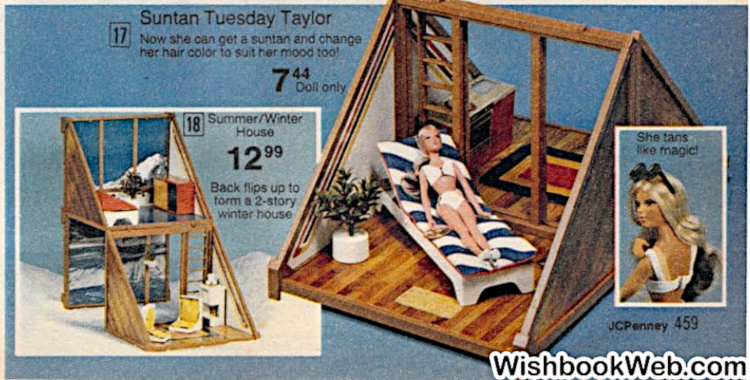
1977 JC Penney catalog on WishbookWeb At Tuesday’s summer-winter getaway, the fun didn’t end with skiing. The second story flipped down and the cardboard inserts changed to convert chalet to beach bungalow.
Just like in her penthouse, Tuesday’s vacation decor was viscerally Seventies, including lots of curving, injection-molded plastic, houseplants, and a stereo system embedded in the coffee table. Her chairs had reversible cushions to suit her summer and winter moods, while the bed could be stripped to serve as a beach chair and the dresser flipped to reveal a kitchenette.
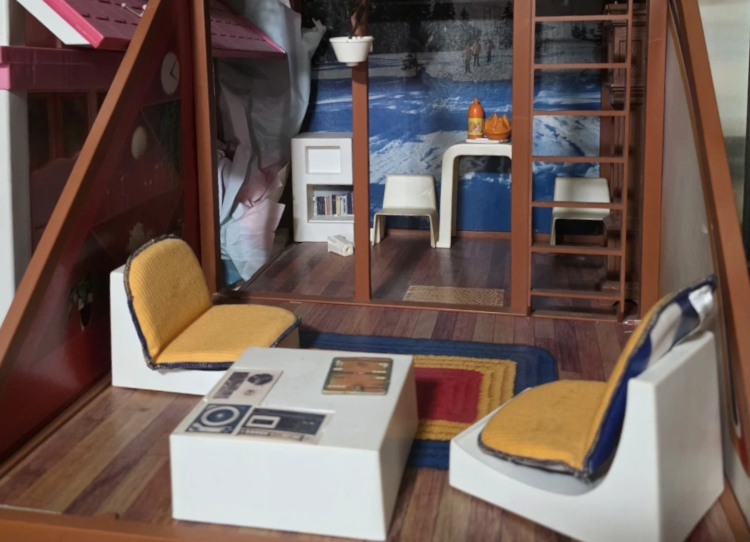
Source: nafititi4 on eBay The walls could be swapped between a surf-y supergraphics aesthetic and a cold-climate wood look with funky triangular shelves depicted on one wall.
See some great pictures of Tuesday and her environs at crissyandbeth.com.
Hawaiian Villa by Empire
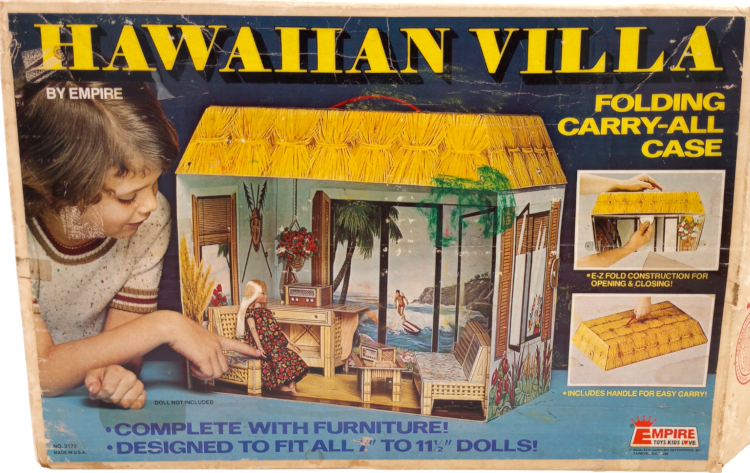
Just down the beach from Tuesday’s bungalow we find Empire’s 1976 Hawaiian Villa, another set produced for fashion dolls, generally–from 7″ up to Barbie’s height, per the packaging. Indeed, the box above shows a petite fashion doll in residence, dwarfed by her own chair (and garment). Surely the target tenant was closer to Barbie’s size.
Empire’s gimmick was that its rooms folded up accordion-style into their trapezoidal roofs for carrying and storage, an interesting choice when you consider that a roof is really inessential to most play sets and can even hinder play. In photographs, this villa’s non-removable roof tends to make it look less sun-drenched than it otherwise might.
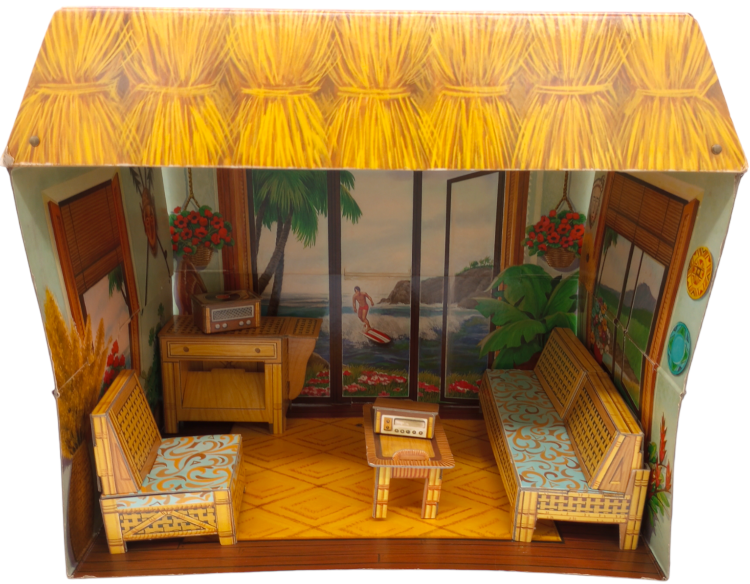
This and previous: cmtrades on eBay. The structure and furniture were made of heavy chipboard, the house walls printed both inside and out with doors, windows and other decorations. The bamboo-look furniture included a sofa, chair, some tables, a radio and hi-fi.
Rustic Lakehouse by Empire

via thegalivanstore on eBay Empire’s other 1976 vacation structure is another waterfront folding room, this one geared to a forested getaway. With duck decoy decor and a chair upholstered in cannons and eagles, this set looks downright masculine. It appears to be home base for a fishing expedition or other sportsman-like activity, perhaps an offbeat choice for a Teen-Age Fashion Model, but on the other hand Barbie’s had fishing gear since 1959.
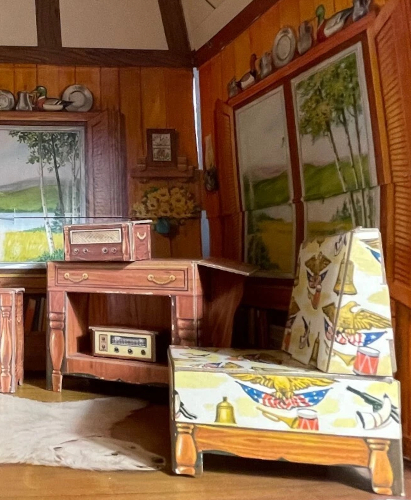
American-revolution-themed “upholstery” (it was the bicentennial, mind) plus about 1/3 of the decorative ducks, via pastjoystoys on eBay. Is that a polar bearskin rug? Some exotic wildlife must roam these parts.
There was at least one other Empire play set in this timeframe, covered elsewhere in the Travelogue; they may also have been responsible for a similar Sears exclusive Ranch and Corral set, but so far I’ve only encountered that set in the Sears catalog.
The Bionic Woman’s Bionic Dome
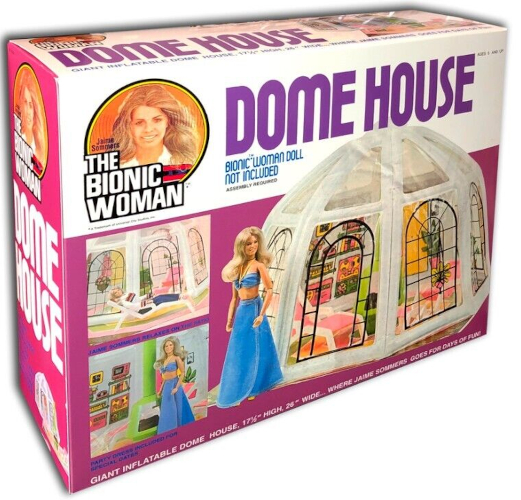
Source: batcavetoys on eBay Another ’76 set, this one is “where Jaime Sommers goes for days of fun,” per the box art above. Not versed in Bionic lore, I initially thought this set to be a technofantastic tent reimagined for Bionic missions abroad–for work, not leisure–with the clear plastic dome and its contents meant to be invisible to Jaime Sommers’ foes. In reality only the dome itself is (mostly) clear, leaving its neon-bright contents in plain view–an operational vulnerability for sure.
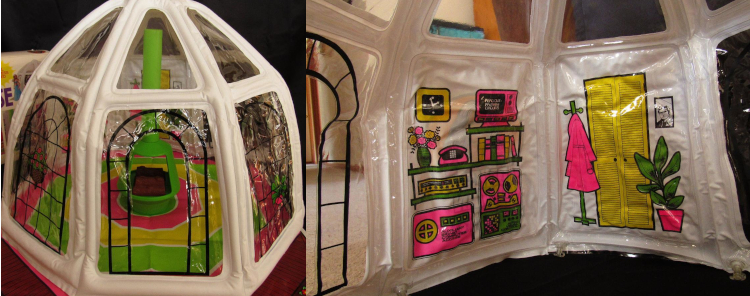
Bionic dome outside and in, via Worthpoint. Inside, we see that Jaime needs lots of computer equipment for her days of fun. Same, honestly. Luckily the ’76 JC Penney Christmas catalog, not pictured, further emphasizes that the set is really “for rest and relaxation,” and goes on to say of the bra top and wrap skirt Sommers wears on the box art, which could be mistaken for beach attire, “Includes evening outfit shown.” Disco chic? Anyway, this is a dome on the move that might manifest just down the shoreline from the Lakehouse–or pretty much anywhere else. Like the A-Frame ski lodge that kicked off this post, the Bionic Dome sports varied seating (beach chair and chair-chair, in this case) and a nice MCM fireplace; and since we’re between missions, it’s no concern if the smoke gives away our position.
Sears/Kenner Airline Reservation System

Airline Reservation System in the 1979 Sears Wishbook via wishbookweb. Our last entry, from 1978, isn’t a destination at all, but an airline reservation may have helped Barbie (or Tuesday, or Jaime) get where she needed to go. The catalog entry above, from the second year the set was sold, shows Wonder Woman hard at work booking reservations, though she herself did not fly commercial. The airline reservation system consisted of extensive high-tech computer equipment, communicators, a world map, and clocks showing times from desirable round-the-world destinations: San Francisco, Hong Kong, Tokyo, Rome, New York, and London.
The set also features a file cabinet labeled “Top Secret.” Top secret airline bookings? Maybe for the Bionic Woman. Or maybe because this set was produced alongside the Sears Computer Play sets, with their Man from U.N.C.L.E./espionage vibes.
![Box art showing a color illustration of a similar set to the Airline Reservation System. The illustration shows the wood-paneled wall with a single clock, the Top Secret filing cabinet, and the two desk units: Reception, with computer elements clearly depicted (black screens and various toggles) plus the piece with typewriter, phone, and, int his view, magnetic reels and other gizmos. A blonde character sits in the attached bucket seat. Text reads, "Desk Model Computer Play Set for 11 1/2" Fashion Dolls; Sears; No batteries needed; works with the push of a finger; includes: - working desk model computer - office diarama [sic] - cardboard desk and file cabinet; for ages 5 to 11 years, doll not included."](https://silkenflame.net/wp-content/uploads/2025/10/78_bucksgarden_on_ebay.jpg?w=750)
We keep our TOP SECRET files in the RECEPTION area. via bucksgarden on eBay. Can’t get enough of Barbie’s travel arrangements? Read the next installment!
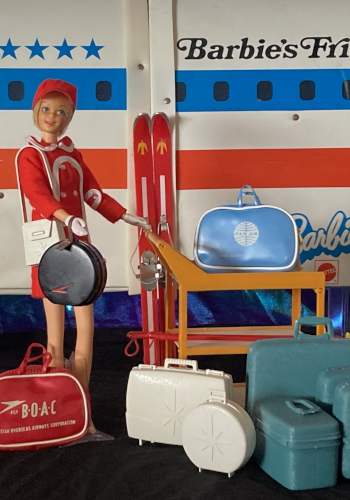
Where to next? This post is about Barbie’s early built environment. The most recent post in this category concerns Seventies rooms and furniture, and the most popular are those on Mattel Modern and Susy Goose furniture and on penthouse apartments. Otherwise, the overall most popular posts on this site are about Barbie shoes, 1959-67, and about Mattel fashion booklets. Or just head up to the Table of Contents to see more options.
-
More crafts and hobbies (1963-1971)
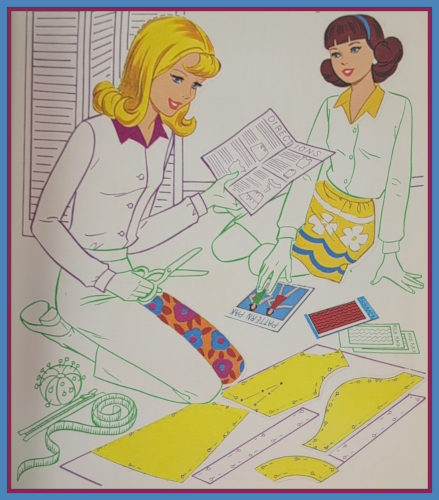
Crafts and hobbies via oniq_146 on eBay. In past entries we’ve seen how Whitman broadened the early Barbie illustration space through their paper doll sets and coloring books, but those are just the tip of the iceberg; here are some other Whitman products that helped define Barbie visually during the first dozen-ish years.
“Barbie and Ken” jigsaw puzzles were produced starting in 1963. One featured a storybook scene of Ken and Barbie before a wishing well, a castle looming in the distance; a second depicted a much more contemporary romantic setting:
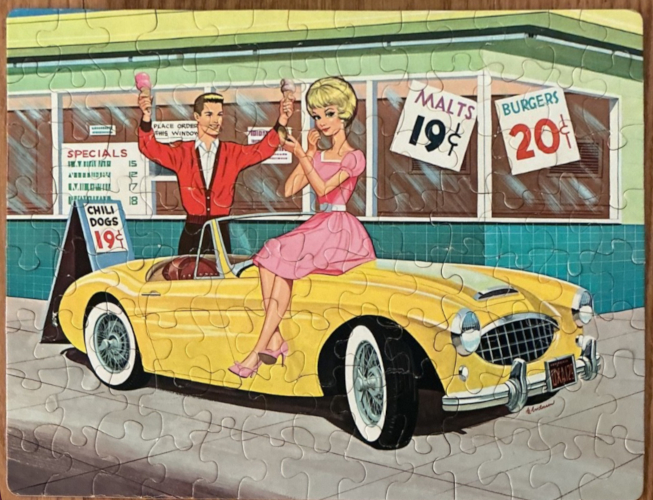
Barbie and Ken jigsaw puzzle via toy88 on eBay. The characters were drawn in the style of early Whitman Barbie paper dolls and look like multiple artists may have contributed to them; Barbie’s head and body particularly don’t quite match.
The next round of puzzle offerings, which tied in the recent Little Theater and Fashion Shop playsets, adopted a more thoughtful artistic technique. (Is it weird that the figures in the catalog listing atop that Fashion Shop link are all dressed identically to those in the puzzle illustration below?)
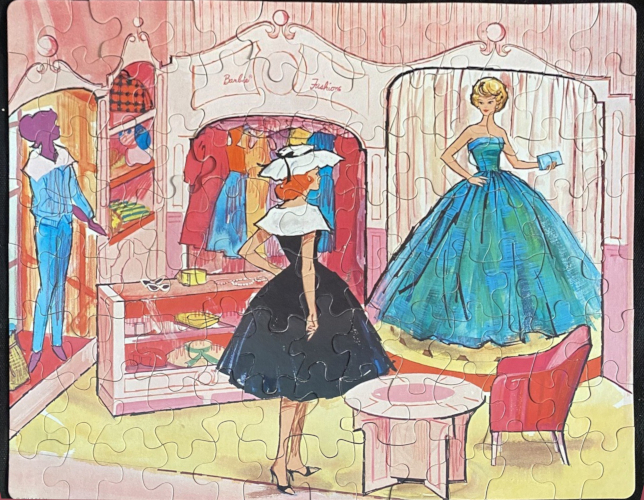
The best Whitman Barbie jigsaw puzzle, via emily1398 on eBay. This refined art style would be also be used for handful of Skipper-centric puzzles through the mid-Sixties.
The fun does not stop at puzzles. There were color-by-number books and paint-with-water sets (called “Magic Window” in 1964). The lines are very faint on the color-by number pages, but I tried to dial up the definition on a couple sample images for us:

Doctored pages from a Whitman Barbie color-by-number book. Originals via sara3883 on eBay. The lefthand image marks the second appearance in this post of the ever-popular and oft-illustrated After Five ensemble.
Though far rarer, the 1964 Magic Window set is pretty cool, surveying assorted modes of transit.
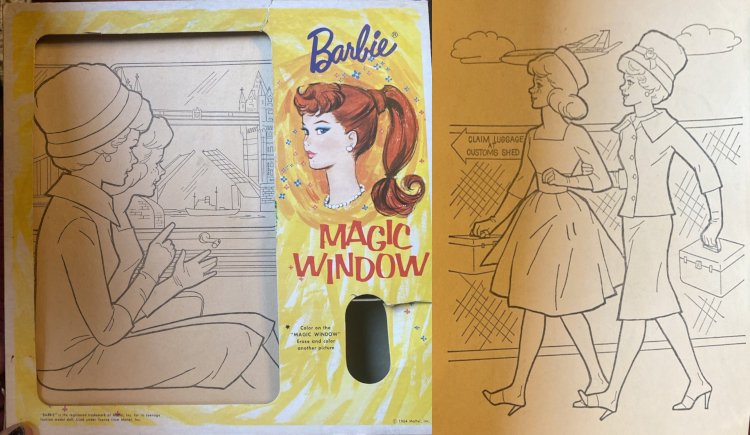
In the Magic Window, Barbie and Midge enjoy railway views before toting their toolboxes (?) outside the airport. Source: angel-ashes1 on eBay. Versions of these activities would recur in later decades, as well.
The sticker book was yet another enduring activity. One from 1971 spins the tale of Barbie and friends as they enter a fashion design and modeling competition. Once again, the characters are a match for the same year’s paper dolls:

In this style, a lot of the girls looked similar. If you’re curious, the characters are, from left to right: Barbie, Stacey, P.J., Francie, Christie, and Casey.
Before stickers are incorporated, the narrative is populated by ghostly forms:
![Three offwhite pages with line drawings in green, blue, and red. In the first, five characters are lined up next to a sign announcing a "Fashion Fair Style Show. All girls will design and model their own clot[the rest of this word is blocked by a figure]. Enter now." In the middle, a character holding scissors cutous out pattern pieces on a table while another looks at a fashion on a dressform. In the third, four characters stand around three dressforms displaying garments. All of the characters' heads are blank, just surrounded by a dotted outline, as are various other elements in the images such as skirts and some tops and accessories. These are waiting to be filled with included stickers (not shown).](https://silkenflame.net/wp-content/uploads/2025/10/whitman_mvlvr2007.jpg?w=750)
This and previous: MVLVR2007 on eBay. Spooky, right? But I kinda think they’re perfect as they are.
It turns out adding the detailed sticker heads to the composition can make them more creepy, instead of less, as Barbie’s knife-wielding mom so ably demonstrates in this played-with sticker book from 1963:
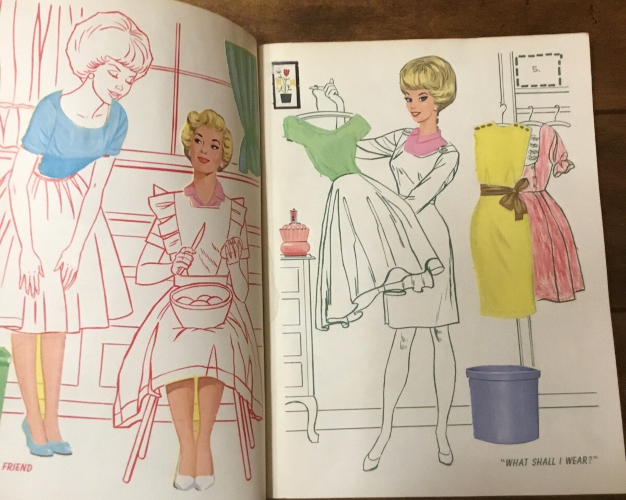
via jacquabb_75 on eBay. The used 1971 sticker page that kicked off this post looks slightly less eerie.
This wraps up our investigation into early Whitman Barbie illustrations. There were other miscellaneous offerings both Whitman and non-, but from an artwork perspective we feel we’ve covered the major styles and themes.
Where to next? This post is about vintage Barbie illustrations. Our most popular post in the category is on Mattel fashion booklets. The most recent post in the category is all about Midge. Other popular posts on this site include the Many Abodes of Barbie series (currently covering 1962-1970) and our Chronicle of Barbie shoes, 1959-67. Or just head up to the Table of Contents to see more options.
-
Barbie’s ’70s Travelogue, Part I: The Mountains are Calling
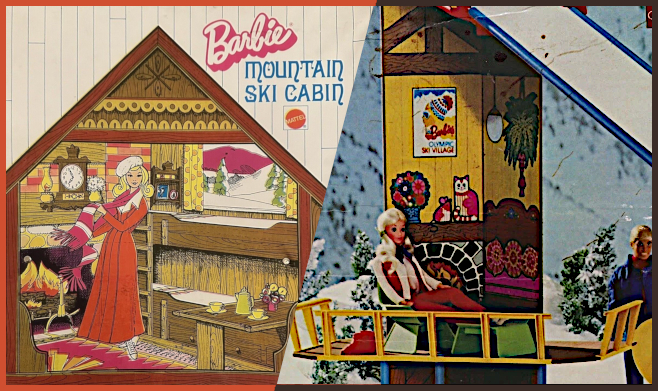
Alpine adventures, via sigourneyrose and High Tech Crafts on eBay. At the conclusion of our Many Abodes of Barbie series, we noted that the Seventies would bring a new focus to Barbie’s built environment, this time outside the domicile. Today we reveal that that focus is travel, and during this decade Barbie exhibited a strong preference for mountain getaways.
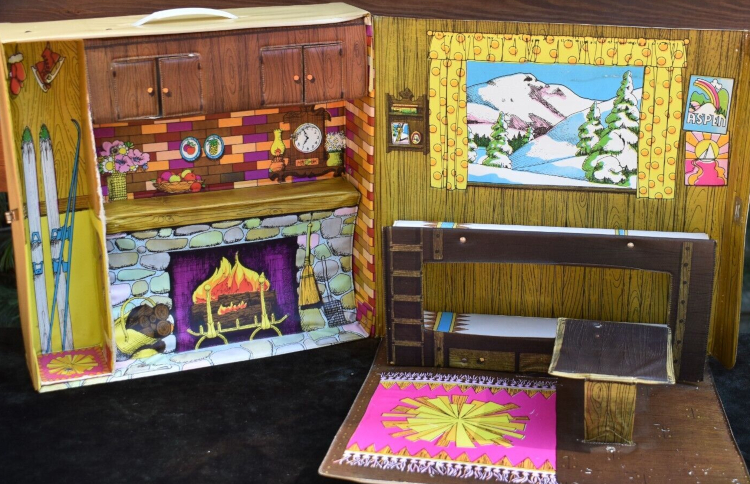
Exhibit A, interior. Via thriftmama on eBay. Consider Exhibit A: Barbie’s 1972 Mountain Ski Cabin. The exterior of this case house, shown at the top of this post, features an illustration of Barbie, bundled up against the cold, posing in a wood-forward room with bunk beds, folksy woven textiles, a table with tea set, a view of snowy slopes, and a crackling fire; and that’s pretty much what you’ll find inside the case, too. There is storage along the wall with the fireplace, with skis and other articles depicted in the closet. The set is made from durable vinyl and many examples can be found in good condition today, although plastic accessories, which varied across catalog descriptions (tea set? camp chairs?), are more often than not missing.
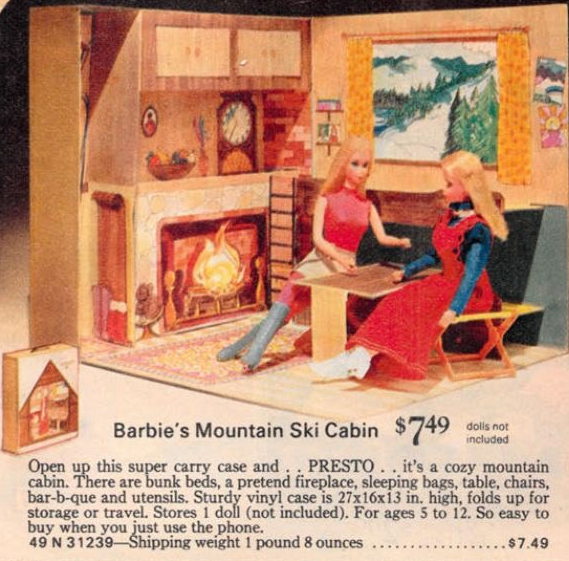
Barbie and… Barbie, I think, test out a prototype of the Mountain Ski Cabin. Source: wishbookweb.com. Sears’ 1972 catalog shows this set looking airier, with a lighter wood finish. The image was corrected in subsequent catalogs.
By the middle of the decade, Barbie had decided to camp and nothing was going to prevent her from camping. Check out this spread of play sets from a single 1973 World of Barbie booklet:

This trio would continue to be offered at least through ’77.
Of course, camping is not mountain-exclusive, and some of those scenes are downright beachy. But by 1975 Barbie had unambiguously ascended the peaks again, this time to the Olympic Ski Village.

Olympic Ski Village box art, via Prime Time Auction. The Ski Village consists of a long ski run with equipment to ski or toboggan down, plus a modestly-sized domestic scene with cozy fireplace, glimpsed bed, and satisfyingly Seventies green table/stool with swivel chair, all tucked into a wraparound patio. On the lower level firewood is stacked.
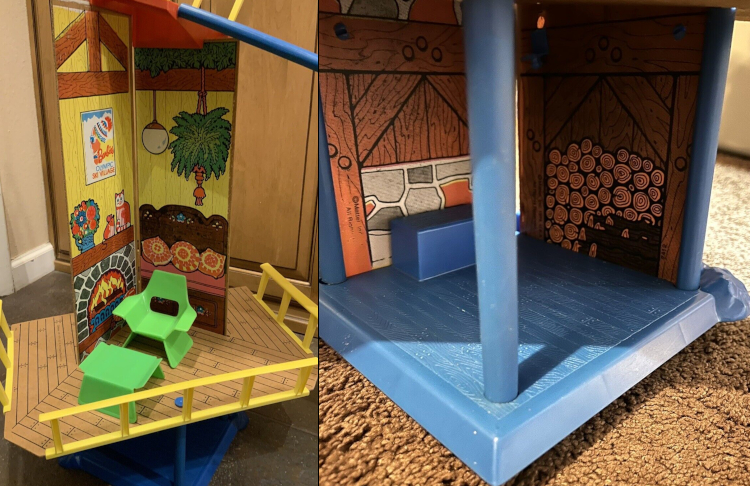
Perspectives on the living space, upstairs and down. Via metaltree and noni0616 on eBay. We found one extra wall in an eBay listing, this one showing a television camera upstairs, pointed out a window toward skiers on a snow-covered slope, and a weight room below. It’s not clear if this piece originated with the Olympic Ski Village: there seems to be no place for it, it’s neither listed in the instructions nor depicted on the box or advertisements, and its proportions aren’t quite right, but it’s certainly on theme. Maybe there was a later version, or something.
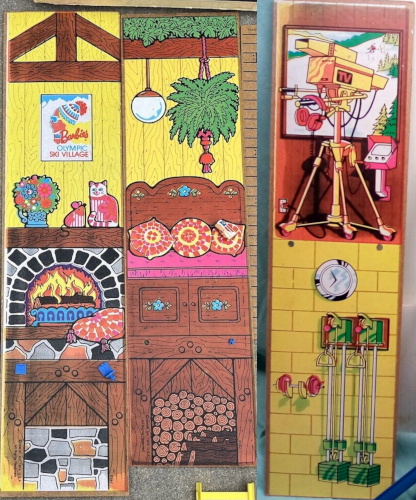
Two walls we understand and one we don’t. Via thethriftkeeper and ctinetoys_1 on eBay. An aside: department store catalog years are used herein wherever possible as these represent when offerings became available to the public, rather than the copyright date. The Olympic Ski Village is a perfect example: everywhere, you’ll see this set dated 1974. But the ’70s Winter Olympics took place in 1972 and 1976; In ’74 this set was irrelevant. In truth, the Ski Village first appeared in the ’75 Christmas catalogs for kids looking forward to the ’76 Olympics, which kicked off just six weeks after that Christmas.
Now… where will Barbie’s Seventies wanderlust take her next?


Silken Flame
Vintage Barbie illustrations, built environment, clones and more

