
In the early ’60s, the glory days of chipboard living, Barbie’s rivals enjoyed rooms and apartments of their own. Tammy, an early competitor from Ideal, came out with a pair of domestic play sets in 1963, hot on the heels of Barbie’s first Dream House.
The first of these houses was not marketed specifically for Tammy but advertised as a home for Tammy OR Barbie, and is known simply as the 1963 Ideal House. While Barbie’s starter home was studio-style, the Ideal House boasted three rooms with furniture to match. A listing in that year’s Sears Wish Book outlines the premise, showcasing Barbie and Midge as occupants of the home alongside Tammy:
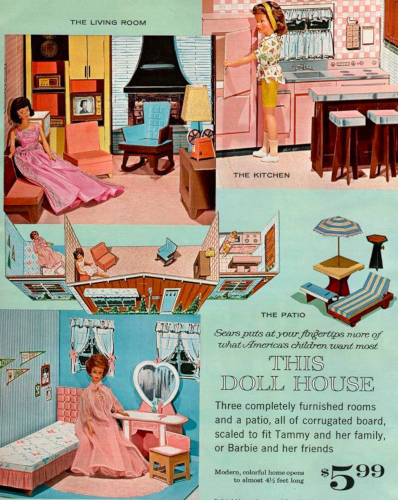
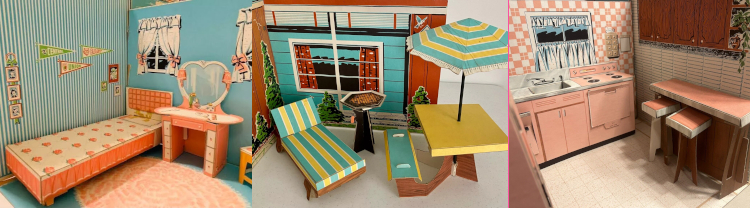
The bedroom, clearly intended for a teenaged girl, is more youthful than any Mattel ever designed for Barbie–it’s closer in style to Skipper’s bedroom. The kitchen looks comfortable, if a bit pink, while the patio is merely alluded to in furnishings–not a well-defined space.
The piece de resistance of this home is its large, luxurious living room, boasting a range of seating options, electronics, shelving/storage, and other little flourishes like a fireplace and fish tank. Rounding out the scene, the warm color scheme and wall decor give the room a welcoming feel.
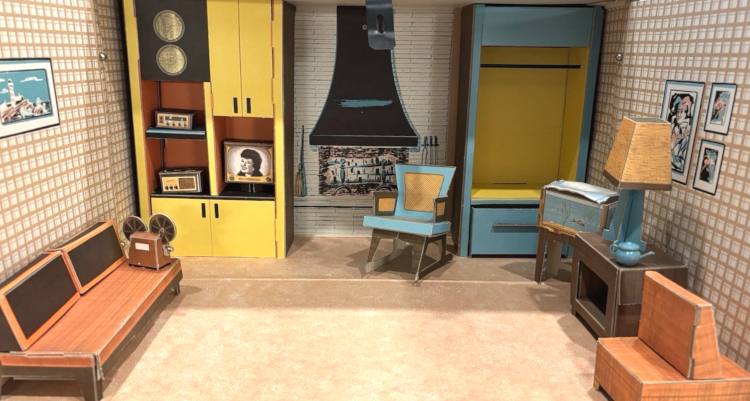
Barbie’s first home had a television and turntable built into a single console. Ideal countered with a television, film projector, radio, and record player as separate units that had space on the built-in shelves. In contrast to Barbie, however, there are no books in the Ideal house.

The exterior makes clear that this home is, like Barbie’s, a suburban haven.
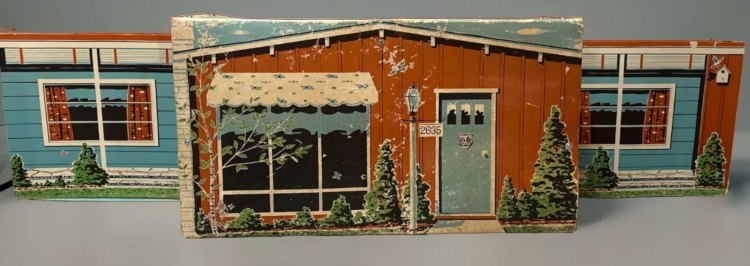
But what’s more suburban than a ranch-style home with carefully manicured lawn? A ranch-style home with carefully manicured lawn and a separate structure for the teenaged family members to entertain their friends, complete with ping-pong, a soda fountain, and color TV. Enter Tammy’s Playhouse.

While Barbie is welcome to use the main house, above, this accessory dwelling unit is pretty Tammy-specific: An awning over the soda fountain reads, “Tammy’s Soda Shoppe,” and a small yard sign is there to ward Barbie off when she starts getting ideas.

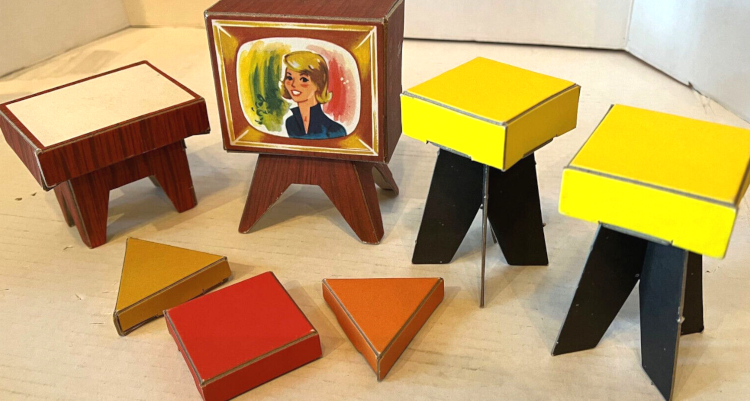
The sharp-eyed reader has noticed that we list among Tammy’s conveniences a color TV, but the catalog image above shows a black-and-white set. Even though the main house settled for watching in monochrome, Tammy’s television was actually produced in color. (We pay attention to the TVs around here).
The catalog entry also exposes that Tammy had a physical, built-out patio with its own brick oven or fireplace. Otherwise, this structure’s exterior resembles a separate domicile more so than it does an outbuilding.

Gracious living for the girl next door!
Where to next? If you enjoyed this post about the built environments of Barbie clones, you may be interested in the ones on beauty parlors and penthouse apartments. The overall most popular posts on this site are about Barbie shoes, 1959-67, and Mattel fashion booklets. Or just head up to the Table of Contents to see more options.

 Silken Flame
Leave a reply to Taswegian1957 Cancel reply